One Day in Shenzhen: Jewelry Markets, Electronics Mazes, and Historic Shopping Streets
If you think Shenzhen is all futuristic skyscrapers, high-tech offices, and shiny shopping malls, you are missing one of the city's most fascinating sides: its markets.
Spend an afternoon exploring Shenzhen's shopping districts, and you will discover a completely different rhythm of city life. In Shuibei, entire commercial buildings are devoted to gold, jade, diamonds, and jewellery workshops. In Huaqiangbei, multi-storey electronics markets are packed with phone accessories, circuit boards, tiny components, and gadgets you probably never knew existed. Then there is Dongmen, where narrow pedestrian streets, bargain fashion, and the smell of freshly cooked street food bring together the old and new sides of Shenzhen.
These places are not polished tourist attractions in the traditional sense. They are busy, practical, and sometimes a little overwhelming. But that is exactly what makes them interesting. You get to see Shenzhen not just as a city that builds technology, but as a place where people buy, sell, trade, negotiate, and turn ideas into businesses.
This guide takes you through three of Shenzhen's best-known shopping districts. You can visit all three in one day, although I would allow more than ten minutes at each if you actually want to explore the markets rather than simply walk through them.
The Shenzhen Market Route at a Glance
- Shuibei Jewelry District (水贝): A major jewellery trading hub where you can browse gold, jade, pearls, gemstones, and jewellery-focused shopping centres.
- Huaqiangbei Electronics Market (华强北): One of China's best-known electronics districts, filled with gadget shops, component suppliers, repair services, and multi-level commercial markets.
- Dongmen Pedestrian Street (东门老街): A lively shopping area combining affordable fashion, local snacks, crowded alleys, and a glimpse of Shenzhen's older commercial history.
My recommendation: Start at Shuibei if jewellery interests you, continue to Huaqiangbei for the electronics markets, and finish at Dongmen for shopping and street food. If you are mainly interested in electronics, give Huaqiangbei the biggest share of your day. The markets are much larger than they first appear, and browsing several buildings can easily take a few hours.
1. Shuibei Jewelry District (水贝): A World of Gold, Jade, and Gemstones
Suggested visit time: 1.5–2 hours
Located in Luohu District, Shuibei is one of the most important jewellery trading areas in China. From the outside, the district looks like a collection of modern commercial towers. Step inside, however, and you will find a very different world: floors of jewellery counters, gold shops, gemstone displays, and businesses specializing in everything from wholesale trading to custom-made pieces.
Shuibei is particularly well known for its gold jewellery industry. It also has businesses dealing in diamonds, jade, pearls, coloured gemstones, and jewellery manufacturing. Much of the activity here is trade-oriented, so you may notice buyers comparing prices, business owners meeting suppliers, and people discussing designs or placing orders.
For visitors, the experience is quite different from browsing a conventional jewellery store. Instead of seeing a handful of display cases, you may find yourself surrounded by rows of counters and specialist shops, each focusing on different materials, styles, or price ranges.
Even if you are not planning to buy anything, Shuibei is worth visiting to understand the scale of Shenzhen's jewellery business. It is a reminder that the city's commercial strength extends far beyond electronics and technology.
If you are interested in jewellery, you can spend time comparing designs and learning about different types of gold, jade, and gemstones. Some shopping centres have retail-oriented shops that welcome individual customers, while other businesses focus more heavily on wholesale orders. Do not assume that every counter sells to walk-in visitors on the same terms.
What to look out for
- Gold jewellery: Explore the shops and displays to see the range of designs, from traditional pieces to contemporary styles.
- Jade and gemstones: Look at the different colours, cuts, and settings, and ask questions if you want to understand what you are seeing.
- The scale of the market: Pay attention to how many different businesses operate within the same district, from retailers to manufacturers and suppliers.
If you plan to buy jewellery, take your time and compare several shops rather than purchasing the first piece you like. Ask for the item's weight, material, purity, certification where applicable, and a clear written receipt; for jade or gemstones, request relevant documentation and make sure you understand exactly what it guarantees. Wholesale prices are not automatically available to every visitor, and a low price is not proof of quality, so buy from a reputable seller and avoid feeling pressured into a quick decision.
2. Huaqiangbei Electronics Market (华强北): Shenzhen's Gadget Maze
Suggested visit time: 2–3 hours
If Shuibei shows you Shenzhen's jewellery business, Huaqiangbei introduces you to the city's electronics culture.
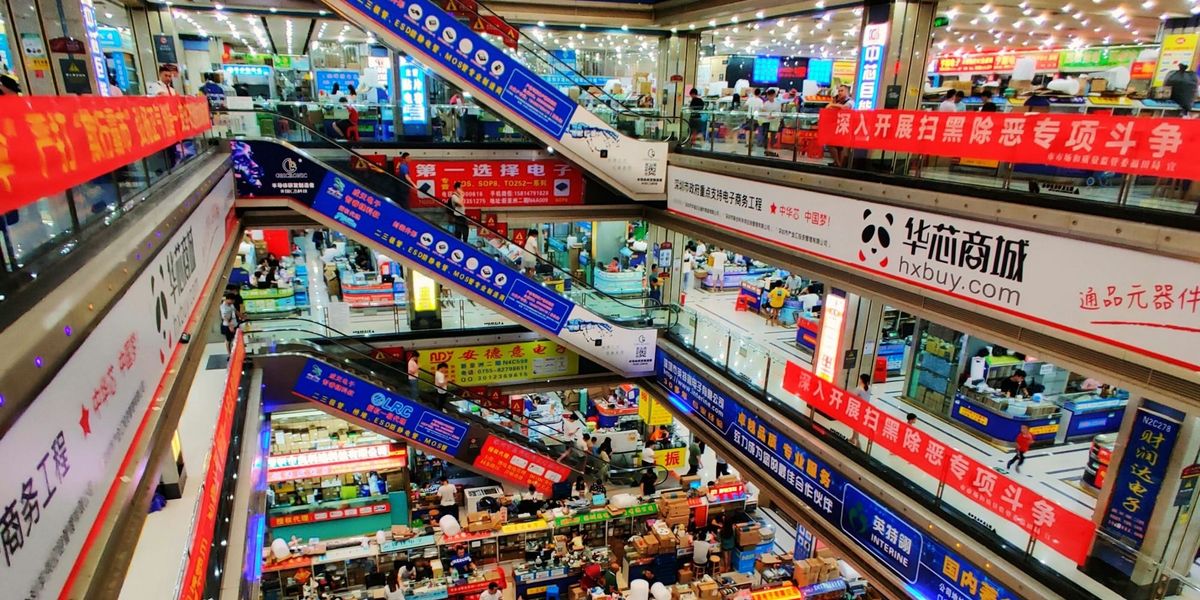
Huaqiangbei is one of China's most famous electronics trading districts. It is known for its concentration of component suppliers, phone accessory shops, repair businesses, gadget retailers, and specialist electronics markets. For anyone interested in technology, it can feel like stepping into a giant catalogue where almost every shelf leads to another product you have never seen before.
The first thing you notice is the density. Large commercial buildings contain multiple floors of small shops and counters, and each floor may focus on a different category of products. You might find phone cases and charging cables in one area, computer accessories in another, and electronic components or repair equipment somewhere else.
This is not quite the same as visiting a conventional electronics store. Huaqiangbei has long been associated with the supply chains that support Shenzhen's hardware industry, and many businesses cater to professional buyers, technicians, manufacturers, and resellers. Some shops are ideal for casual visitors, while others are more specialized.
You do not need to be an engineer to enjoy the experience. Even if you cannot identify every component, the sheer variety makes the district fascinating. It is also a good place to see how Shenzhen's manufacturing ecosystem works on a smaller scale: a business looking for a particular part may be able to compare several suppliers within a relatively compact area.
SEG Plaza and Huaqiang Electronic World are well-known names associated with the district, but the best building to visit depends on what you want to find. Before going, decide whether you are looking for consumer gadgets, phone accessories, computer equipment, or electronic components. Otherwise, it is easy to spend an hour wandering around without finding the products you actually want.
What to look out for
- Electronic components: Depending on the market and shop, you may find circuit boards, connectors, sensors, LEDs, cables, and other specialist parts.
- Phone and computer accessories: A practical area to browse if you want chargers, cases, adapters, or other everyday electronics.
- Multi-storey market buildings: Explore a building systematically instead of trying to visit every market in the district.
Huaqiangbei is easier to navigate if you have a specific shopping goal, so make a short list of the products you want and check which building or floor is most suitable. Compare prices and specifications, confirm compatibility before paying, and test electronic products when possible. For higher-value purchases, ask about warranty coverage, returns, and whether the item is new, refurbished, or used. Keep in mind that some stalls cater to trade buyers rather than casual shoppers, so do not expect every seller to provide the same service or after-sales support.
3. Dongmen Pedestrian Street (东门老街): Shopping, Snacks, and Shenzhen's Older Side
Suggested visit time: 1.5–2 hours
After exploring jewellery counters and electronics stalls, Dongmen is a good place to finish the day with something a little less technical.
Dongmen, often referred to as Dongmen Old Street, is one of Shenzhen's best-known traditional commercial areas. Its history stretches back centuries, to the development of the old market town of Shenzhen. Today, it is a busy shopping district filled with clothing stores, accessories, small shops, snack stalls, and shopping centres.
The atmosphere is completely different from Shuibei and Huaqiangbei. Instead of floors devoted to specialist products, Dongmen is a maze of pedestrian streets where you can wander between fashion shops, browse inexpensive items, and follow the smell of food through the crowds.
Some parts of the area are modern and brightly lit, while others retain reminders of the district's older commercial history. The contrast is part of the appeal. Shenzhen is often described as a young city, but Dongmen offers a glimpse of the trading streets that existed before the city became the high-rise metropolis it is today.
Shopping is one reason to visit, especially if you enjoy browsing affordable clothing, shoes, bags, accessories, and small gifts. But you do not need to buy anything to enjoy Dongmen. It is equally good for people-watching and sampling local snacks.
Food is a major part of the experience. Depending on which stalls are operating, you may find grilled skewers, fried snacks, egg waffles, desserts, bubble tea, and a wide range of Chinese street food. Some offerings reflect the broader food culture of Guangdong and Hong Kong, while others are popular modern snacks found throughout China's shopping districts.
The area can become crowded, especially in the evening and on weekends. Rather than trying to follow a strict route, pick a few streets that catch your eye and explore them at your own pace.
What to look out for
- Affordable shopping: Browse fashion, accessories, small gifts, and everyday items.
- Street food: Try a few snacks as you move between the pedestrian streets.
- Old and new Shenzhen: Look for the contrast between the area's historical identity and its modern shopping developments.
Visit Dongmen when you have time to wander rather than when you are rushing to catch a train or meet a schedule. The pedestrian streets can be crowded, so keep your belongings secure and check prices before ordering food or buying items from small stalls. If you are trying street food, choose busy vendors with freshly prepared dishes, and carry a little cash as a backup even though mobile payments are widely used in Shenzhen.
How to Spend One Day Exploring Shenzhen's Markets
These three districts make a good combination, but they are not all in the same neighbourhood. Allow time for metro journeys, finding the correct market entrances, and walking between buildings.
9:30–11:30 AM — Explore Shuibei Jewelry District
Start in Shuibei while you have plenty of time to browse. Walk through one or two jewellery shopping centres, compare the displays, and get a feel for the variety of businesses operating here.
If you are planning to buy jewellery, this is the time to do your research rather than making a rushed purchase at the end of the day.
11:30 AM–12:30 PM — Lunch in the Area
Take a break before moving on. There are restaurants and local dining options around the broader district, so choose somewhere convenient rather than travelling far for lunch.
12:30–1:15 PM — Travel to Huaqiangbei
Use the metro or a taxi, depending on your starting point and the traffic. Check the best station for the specific electronics market you want to visit.
1:15–4:00 PM — Browse Huaqiangbei
Spend the afternoon exploring one or two electronics buildings. If you are shopping for a specific item, focus on the relevant floors and compare products before buying.
If you are mainly visiting out of curiosity, allow time to wander and observe the range of businesses. You will probably see more than enough to understand why Huaqiangbei has such a strong reputation among technology enthusiasts.
4:00–4:45 PM — Travel to Dongmen
Head towards Dongmen for the final stop. Allow extra time if you need to change metro lines or walk from the station to the busiest shopping streets.
4:45–7:00 PM — Shopping and Street Food at Dongmen
Browse the shops, try a few snacks, and enjoy the evening atmosphere as the pedestrian streets become busier.
You can stay for dinner if you find somewhere appealing, or continue exploring the surrounding area before heading back to your hotel.
The schedule is flexible, so feel free to spend longer in the district that interests you most. Shuibei is better for jewellery, Huaqiangbei deserves extra time if you are shopping for electronics, and Dongmen is the easiest place to finish with casual browsing and food.
Practical Tips for Visiting Shenzhen's Markets
1. Know What You Want Before You Arrive
These markets are large, and their size can be both their biggest attraction and their biggest challenge. Having a general idea of what you want to buy will save time, especially in Huaqiangbei.
For jewellery, think about the type of material or design you are interested in. For electronics, write down the model, specifications, or compatibility requirements. For Dongmen, it is perfectly fine to browse without a shopping list.
2. Use the Metro and Check the Correct Station
Shenzhen's metro is useful for connecting these shopping districts, but do not assume every market is directly beside the station. Check the nearest exit and the entrance to your intended building before setting off.
The exact route will depend on where you start and which market you want to visit. Travel times can also vary with transfers and walking distances, so leave a buffer rather than planning the day down to the minute.
3. Compare Prices and Check What You Are Buying
Markets can offer a wide range of products, but the cheapest option is not always the best value.
For jewellery, check the material, purity, weight, and any relevant certification. For electronics, check specifications, compatibility, product condition, and warranty terms. Ask for a receipt and make sure you understand the seller's return policy before paying.
4. Keep Your Belongings Secure
All three districts can be busy, especially at peak shopping times. Keep your phone and wallet somewhere secure, pay attention to your bags, and avoid leaving valuables unattended while examining products.
If you are buying several items, keep your receipts together so you can check your purchases later.
5. Mobile Payments Are Common
Many shops and food stalls in Shenzhen use mobile payment systems. International visitors should check which payment methods they can set up before travelling, as the options available may depend on their country of residence and account verification.
Carry a backup payment method, and do not assume that every small vendor will accept every international card.
Final Thoughts
Shenzhen's markets reveal a side of the city that you will not necessarily see from its skyline or shopping malls.
Shuibei shows the scale of China's jewellery trade, with gold, gemstones, and specialist businesses packed into a dedicated commercial district. Huaqiangbei is a fascinating place to explore the products and components behind Shenzhen's reputation as a hardware and electronics hub. Dongmen, meanwhile, brings the day back to street level, with affordable shopping, local snacks, and a lively atmosphere rooted in the city's older commercial history.
If you have one day, all three can make a rewarding route, provided you leave enough time for transport and browsing. You do not need to buy anything to enjoy them, either. Sometimes the most interesting part is simply seeing how these markets work and how different each district feels.
My advice? Choose one market where you want to spend real time, use the other two to round out the day, and leave Dongmen for the evening when you can shop, snack, and explore without watching the clock.
That is when Shenzhen's market culture really comes alive.